


.png)


Key takeaways
- Muscle is denser than fat, so you can look leaner and stronger even if the scale doesn’t drop (or goes up).
- Body Mass Index (BMI) isn't always the best way to measure progress. Track body composition (fat vs lean mass) with methods like DEXA or callipers and monitor your performance and progress over time.
- Recompose to avoid excess body fat by prioritising resistance training and adequate protein (about 1.2–1.7 g/kg/day), plus consistent nutrition and recovery.
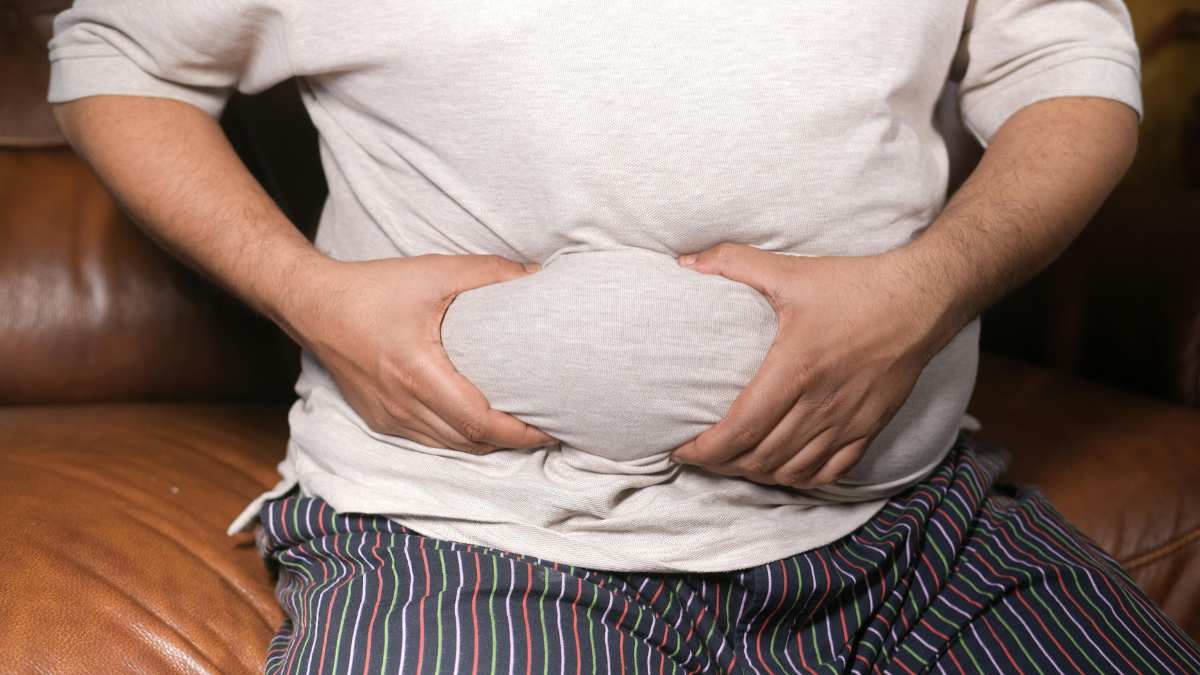
There's nothing worse than when you've been hitting the gym consistently, getting in your daily steps, and hitting your protein targets, only for the number on the scale to stay stagnant or worse yet, go up. Or maybe that beer belly just isn't going away, so you're asking why you should even bother?
Before you decide to go down to the pub, consider that your new health routine is a waste of time; you could be in the process of changing your body composition for the better.
You've likely heard the expression "muscle weighs more than fat." But that's not true. Muscle tissue doesn't weigh more than fat tissue, but it is denser, and so your total body weight alone isn't the best indicator of where you are.
In the article, we examine the truth surrounding this myth and what it means for the concept of BMI. We also share practical advice for building your muscle mass while slashing body fat to help you become the best possible version of yourself.
What is fat?
Body fat refers to the fatty tissue inside your body that doesn't contain any muscle mass, electrolytes, or body fluid [1]. Known scientifically as 'adipose tissue,' this can be white, yellow, brown, beige or pink [2].
While fat has become a bit of a dirty word over the years, it actually plays a crucial role in our overall health. Not only does it provide a protective coating for all our organs, muscles, and the central nervous system, but it's also our energy provider — fuelling us when we don't have food in our reserves [3]. Fats and lipids also help to regulate some of our hormones, such as steroid hormones.
We all need some fat to function, but not all types are created equal. Fat can be stored in several ways, each serving a different purpose. The three types of fat are:
- Essential fat around the brain, nerves, and membranes to support our daily bodily processes [4].
- Subcutaneous fat lives under your skin, and it's essentially energy storage. This is what a pair of body fat callipers will grab onto.
- Fat around the major organs, which is known as visceral fat. Many types of fat, particularly visceral fat, have a bad rap in recent years, but it's still crucial.
We all have a combination of these different fat types, to varying degrees.
However, when we have an excess of it, it can increase the risk of health problems [5]. A high body fat percentage also leaves us with that beer belly look that many blokes want to avoid.
What is muscle?
The other crucial part of the body composition puzzle is muscle. These are the soft tissues in our body that work with bones, tendons, and ligaments to support movement [6].
You've got more than 600 muscles in the body, with the three main types being skeletal, smooth, and cardiac [6]. They do everything from pumping blood to the rest of our body to helping you carry those bags out of Coles.
Not only is a higher muscle mass essential for health, mobility, and longevity, but it also helps to create a lean, strong, and toned appearance. We've all got roughly the same amount of muscles, and while nobody is born naturally muscular, there can be genetic differences in the shape and size.
For example, some people have faster-twitch muscles that support powerful, explosive movements, while others have more slow-twitch muscles that are great for endurance sports like marathon running [7].
The good news is that, no matter where you sit, it's possible to actively grow your muscles through a process called muscle hypertrophy [8]. This is when you put strain on the muscles to create tiny tears in the muscle. Resistance training, like lifting weights, is the most common way to support muscle growth, but even activities like cardio can give you some muscle growth, especially in the beginning. By consuming plenty of protein around your workouts, you can repair and replace the fibres, leading to muscle growth.
How do muscle and fat impact your weight?
In the medical community, body mass index (BMI) is the most common method for measuring weight and the associated health risks.
However, the BMI scale isn't able to distinguish between fat and muscle, making it quite inaccurate for some people. For example, because professional athletes and weightlifters tend to have a lot of muscle, BMI can categorise them as overweight or obese even though they're clearly incredibly fit and healthy.
For this reason, many people who are serious about health and fitness choose to also monitor their body fat percentage. This is a measure of how much of your weight is fat, compared to lean tissue like bones and muscle. It can also give you a much better big-picture view of your body composition and whether your goal should be to build muscle, lose fat, or both.
By measuring your muscle-to-fat ratio, you can gauge your body's overall lean muscle mass. Whether you get this professionally measured or use a body fat scale at home, this will typically be communicated as a body fat percentage. For men, a healthy body fat percentage is typically between 18% and 24% [9].
However, this doesn't take age and athletic status into consideration, so it should be taken with a big chunk of salt. What's more useful is to look at your body fat percentage alongside other indicators such as your BMI, how your clothes fit, how you look in the mirror, and how fit you are.
Does muscle weigh more than fat?
If you've ever been confused by this expression, you're not alone. Most would agree that muscle weight and fat weight are the same because a kilo is still a kilo, right? As it turns out, it actually refers to a difference in volume.
Muscle does technically weigh more than fat because it's denser. If you grab a fistful of skeletal muscle, it will be heavier than a fistful of belly fat. However, these tissues look different in the body. Muscle is more compact and takes up less space in the body [10]. That's why you're less likely to notice it visually if you gain muscle vs fat.
How to measure your body composition
There are a multitude of ways you can get an estimate of your body fat percentage. Hydrostatic weighing is considered highly reliable and involves being weighed underwater to calculate the difference in body weight in air and underwater using Archimedes Principle.
DEXA scans are also considered highly accurate, using a special type of X-ray called a dual-energy X-ray (DEXA) to differentiate between bone mineral, lean mass, and fat mass.
Unfortunately, both of the processes must be conducted by professionals using specialised equipment. While there are some convenient ways to measure body composition at home, these are far less accurate.
The most reliable way is to use callipers, a plastic, pincer-like device you use to measure your subcutaneous fat at three to five different sites on the body. While this can be quite accurate when done correctly, there's a lot of margin for error if you don't really know what you're doing.
Another way to measure your muscle and fat at home is with a body analysis scale. As well as measuring your weight, these use bioelectric impedance analysis (BIA) to estimate your body fat percentage. This sends a small electric current through the body and calculates the time it takes to travel from top to bottom, as fat creates more resistance than muscle or water.
These measurements can then be used to estimate a person's body fat percentage. However, these scales can be up to 10% inaccurate, particularly if they don't have hand bars [11].
Since there's no method for estimating body fat percentage that's 100% accurate, these are best used to track changes over time, rather than as an absolute value. In other words, focus less on the scale and more on sticking to a balanced diet and regular exercise.
Can fat turn into muscle?
Turning fat into muscle is physiologically impossible because they are made up of different cells. Fat also lacks the nitrogen to be turned into amino acids, which are responsible for fueling muscle development [12]. Essentially, turning fat into muscle would be like trying to turn a schooner into a burger.
The good news is, the more muscle mass you have, the easier you'll typically find it to burn fat as the body becomes more efficient at using calories. But just because you lose excess fat doesn't necessarily mean you'll automatically increase muscle mass. In fact, some people find that when they lose weight, they actually lose muscle unless they're making an intentional effort to preserve it by working the major muscle groups.
Tips for reducing body fat and increasing muscle mass
You don't have to choose between burning fat and muscle gain. With the right approach, you actually can trim down your body fat while simultaneously building muscle.
Here's how:
Up your protein consumption to gain muscle
When many blokes set out trying to lose weight, they resort to ditching entire food groups and drastically cutting calories or carbs. This can backfire, as our bodies need ample energy in the form of calories to fuel workouts and gain muscle.
Rather than thinking about what you shouldn't eat, what's far more effective is to focus on getting in as many high-protein foods as possible as part of a healthy diet. A good rule of thumb is around 1.2-1.7 grams of protein per kilogram of body weight per day is a good rule of thumb [13].
Whether you're a carnivore or prefer plant-based sources, protein is your new best friend from the world of macronutrients because it's what will help you build lean muscle without gaining weight. Without it, the body simply can't repair the muscle tears that occur during exercise. While you don't necessarily have to chug a protein shake as soon as you leave the gym, it's a good idea to consume protein within a few hours of your workout.
Get moving to start burning belly fat
While you've likely heard that abs are made in the kitchen, muscles are actually made in the gym. Although you can certainly lose weight without doing any exercise by consuming fewer calories than you burn, muscle can only be gained through resistance training.
That doesn't necessarily mean you have to rush into a hardcore strength training program. Light weights or your own body weight can provide the resistance you need to get your muscles firing.
Whatever way you want to start losing weight or increasing how much you move, what matters isn't just eating healthy but changing your life around in a sustainable way. Extreme diets and exercise programs might work in the short term, but you're probably not going to keep them up for years to come. That's why working with your doctor to discuss the right path to your goals, whether that's a personal trainer or options like Pilot's Weight Reset Program, is essential. Schedule an appointment with your GP to take the first step to becoming the best version of yourself today.
Image credit: Pexels




.svg)


